
What Time of Day Produces the Best Landscape Photos? A Professional Guide to Natural Light
Learn how professional landscape photographers choose the best time of day to shoot. Discover the advantages of Golden Hour, Blue Hour, morning, evening, and midday light, plus expert planning techniques for consistently stronger landscape photographs.
Table of Contents
- Why Time Matters More Than Weather
- Understanding the Daily Cycle of Light
- Can You Photograph Landscapes at Midday?
- When Midday Actually Works
- Why Side Light Creates Better Landscapes
- Professional Workflow: Planning Around Light Instead of Hope
- Professional Tip
- Frequently Asked Questions
A Professional Guide to Natural Light of Day Produces the Best Landscape Photos?
If there is one lesson every landscape photographer learns sooner or later, it’s this: great landscapes are created by light, not by locations.
You can stand in one of the most breathtaking places on Earth, use the latest full-frame camera and the sharpest lens available, and still come home with an ordinary photograph if the light isn’t working in your favor. On the other hand, an unremarkable hill, quiet lake, or rural road can become an extraordinary image when photographed under exceptional light.
This principle has guided landscape photographers for generations, and it remains one of the most enduring truths in the craft. Modern digital cameras have dramatically improved our ability to recover shadows, preserve highlights, and work in extremely challenging lighting conditions. RAW files, advanced image sensors, and impressive dynamic range give photographers far more flexibility than ever before. Yet no amount of technology can replace beautiful natural light. Cameras record light—they do not create it.
Professional landscape photographers rarely ask, “Where should I photograph?” Instead, they ask, “When should I photograph this location?” That small shift in thinking changes everything.
The most memorable landscape photographs are rarely the result of chance. They are the result of understanding how sunlight, weather, atmosphere, and timing work together to shape a scene.
Why Time Matters More Than Weather
Many beginners assume landscape photography depends primarily on finding spectacular scenery. Experienced photographers know that scenery is only half of the equation—the other half is timing.
The sun changes position every minute, and as it moves across the sky it continuously reshapes:
- shadow length
- color temperature
- contrast
- perceived depth
- texture
- atmospheric haze
- mood
A location photographed every hour throughout the day can produce completely different images. The landscape itself hasn’t changed; only the light has.
This is why professional photographers often revisit the same location several times before capturing the image they envisioned. A mountain range that appears flat and uninspiring at noon may become dramatic just before sunset, when long shadows reveal every ridge and valley. Likewise, a quiet lake that looks ordinary in the afternoon can become extraordinary during Blue Hour, when calm water reflects the subtle colors of the sky.
For this reason, experienced photographers often postpone a shoot—not because the location is wrong, but because the light hasn’t arrived yet.
Understanding the Daily Cycle of Light
Natural light changes continuously from sunrise until long after sunset. Rather than thinking in terms of “day” and “night,” professional photographers divide the day into several distinct lighting phases, each with its own visual characteristics and creative opportunities.
Understanding these transitions helps you decide not only when to photograph a landscape, but what kind of story that landscape can tell.
Blue Hour
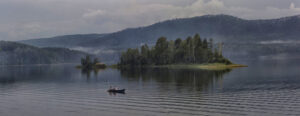
Blue Hour occurs shortly before sunrise and shortly after sunset. During this period, the sun sits below the horizon, but enough indirect light remains in the atmosphere to illuminate the landscape.
Because the sky is no longer much brighter than the land, dynamic range becomes easier to manage, allowing both the foreground and the sky to retain detail.
Blue Hour is characterized by:
- cool blue color tones
- extremely soft shadows
- balanced brightness between sky and landscape
- reduced contrast
- peaceful, atmospheric mood
These conditions work particularly well for:
- lakes
- rivers
- coastal landscapes
- mountain scenes
- city skylines
- architecture
Water often appears smoother because longer shutter speeds become possible without using extremely strong neutral density filters. Reflections become cleaner, while the sky retains rich color without overwhelming brightness.
Many photographers pack their equipment as soon as the sun disappears. Professionals often begin producing their strongest work at that moment, continuing well into civil twilight and, in some cases, nautical twilight when the remaining light creates an entirely different atmosphere.
Golden Hour
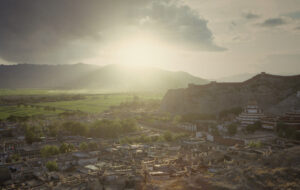
Golden Hour is perhaps the most recognizable lighting condition in landscape photography.
It occurs shortly after sunrise and shortly before sunset, when sunlight travels through much more of the Earth’s atmosphere before reaching the landscape. During this longer journey, shorter blue wavelengths scatter more effectively, allowing warmer red and yellow wavelengths to dominate.
The result is light that is:
- warm
- directional
- soft
- highly textured
Golden Hour naturally creates:
- glowing highlights
- long shadows
- visible surface texture
- strong visual separation between foreground and background
- greater perception of depth
This makes it one of the most forgiving—and most rewarding—times of day for landscape photography.
Instead of flattening terrain, the low sun reveals every ridge, hill, rock, tree, and field through carefully shaped shadows. This is why mountains appear dramatically more three-dimensional at sunrise than they do beneath an overhead midday sun.
Golden Hour also produces beautiful specular highlights on water, soft illumination across grasslands, and gentle transitions between light and shadow that require far less editing during post-processing.
| Feature | Golden Hour | Blue Hour |
|---|---|---|
| Light Color | Warm | Cool Blue |
| Contrast | Moderate | Low |
| Shadows | Long | Almost none |
| Best Subjects | Landscapes, portraits | Architecture, cityscapes, lakes |
| Mood | Warm and vibrant | Calm and atmospheric |
Morning Light
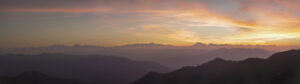
Morning light offers advantages beyond beautiful color.
The atmosphere is often cleaner because overnight cooling reduces airborne dust and heat shimmer. Wind tends to be calmer, making reflections on lakes and rivers smoother. Humidity frequently produces light mist or valley fog that adds depth rather than obscuring detail.
Morning is an excellent choice for photographing:
- forests
- valleys
- lakes
- wetlands
- waterfalls
- wildlife landscapes
- agricultural landscapes
For commercial assignments involving luxury resorts, golf courses, hotels, vineyards, or destination marketing campaigns, early morning offers another practical advantage: there are usually far fewer visitors. Photographing before guests arrive often reduces the need for extensive retouching later while preserving a clean, inviting appearance.
Morning light is also particularly effective for revealing atmospheric perspective—the gradual reduction in contrast and color saturation as objects become more distant. This natural layering helps create a stronger sense of depth, especially in mountain landscapes.
Evening Light
| Time of Day | Light Quality | Contrast | Best Subjects | Common Challenges |
|---|---|---|---|---|
| Sunrise | Soft | Low | Mountains, lakes | Short shooting window |
| Golden Hour | Warm | Medium | Most landscapes | Changes quickly |
| Midday | Hard | High | Waterfalls, deserts | Flat light |
| Evening | Warm | Medium | Coastlines, valleys | Crowds |
| Blue Hour | Soft | Low | Architecture, water | Requires tripod |
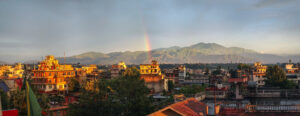
Evening light shares many characteristics with morning light but often creates a different emotional atmosphere.
As temperatures fall, airborne moisture may soften distant mountains and create gentle atmospheric haze. Throughout the day, clouds have had time to develop, making dramatic sunsets more likely than dramatic sunrises.
Sunsets are also less predictable.
A completely ordinary afternoon can transform into spectacular light during the final ten minutes before sunset. Likewise, a colorful sunset may continue evolving long after the sun has disappeared below the horizon.
Experienced photographers rarely pack their equipment the moment the sun disappears. Some of the richest colors develop twenty to thirty minutes later, during late civil twilight and Blue Hour.
Patience is often rewarded.
| Feature | Morning Light | Evening Light |
|---|---|---|
| Color Temperature | Cool to warm | Warm to cool |
| Atmosphere | Clean air, mist, calm wind | More haze, colorful clouds |
| Crowds | Usually fewer | Often more visitors |
| Best Subjects | Lakes, forests, wildlife | Mountains, coastlines, cityscapes |
| Advantages | Clear visibility, smooth reflections | Dramatic skies, rich sunset colors |
Can You Photograph Landscapes at Midday?
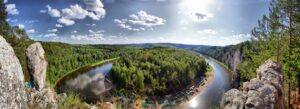
Absolutely—but you need to understand what midday light does to your subject.
Traditional photography guidance has long warned against photographing landscapes around noon because sunlight comes from almost directly overhead. Despite the enormous advances in digital cameras, that advice still largely holds true.
When the sun is high:
- shadows become very short
- surface texture disappears
- mountains lose visual depth
- forests appear flatter
- colors become less saturated
- contrast increases dramatically
- highlights become more difficult to preserve
Digital cameras can recover more highlight and shadow detail than film ever could, but they cannot recreate texture that the light never revealed in the first place.
Lighting determines shape.
The camera simply records what the light reveals.
When Midday Actually Works
Many photographers believe noon should always be avoided.
That isn’t entirely true.
Certain landscapes actually benefit from stronger sunlight.
Waterfalls
Overcast midday conditions create naturally diffused light.
This minimizes harsh reflections on wet rocks while allowing longer shutter speeds to produce silky water without extreme contrast.
Dense Forests
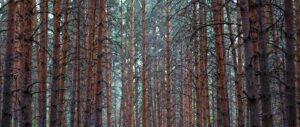
Tree canopies naturally soften overhead sunlight.
Even with the sun directly above, forests often behave like enormous natural softboxes. Filtered light creates beautiful patterns while keeping contrast under control.
Desert Landscapes
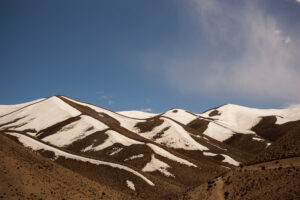
In deserts, harsh sunlight often becomes part of the visual story.
Strong shadows emphasize:
- sand dunes
- cracked earth
- canyon walls
- rock formations
- repeating geometric patterns
Rather than fighting the light, photographers use it to reveal texture and shape.
Black-and-White Landscapes
High contrast becomes an artistic advantage.
Instead of avoiding deep shadows, embrace them.
Graphic compositions with bold shapes often translate exceptionally well into monochrome photography.
Coastal Photography

Midday can also work surprisingly well along coastlines when strong sunlight enhances the vivid colors of tropical water. A circular polarizing filter can reduce glare, increase water transparency, and deepen blue skies, provided it is used carefully with wide-angle lenses.
| Subject | Advantages | Challenges | Recommended Conditions |
|---|---|---|---|
| Waterfalls | Soft light under clouds | Spray on lens | Overcast |
| Forests | Filtered sunlight | Uneven patches | Dense canopy |
| Deserts | Strong texture | Extreme contrast | Clear sky |
| Coastlines | Bright water colors | Reflections | Polarizing filter |
| Black-and-white | Dramatic contrast | Deep shadows | High-contrast scenes |
Why Side Light Creates Better Landscapes
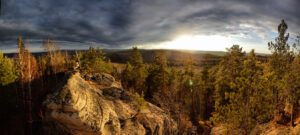
One of the most enduring principles in landscape photography is the importance of side lighting.
Modern photographers continue to rely on it because it reveals three-dimensional form better than almost any other lighting direction.
Imagine photographing a stone wall.
When sunlight comes directly from behind the camera, the wall appears flat.
Move the sun ninety degrees to one side.
Suddenly every crack, edge, and texture becomes visible.
The wall hasn’t changed.
Only the direction of the light has.
The same principle applies to:
- mountain ridges
- cliffs
- sand dunes
- agricultural fields
- forests
- snow
- coastal rocks
- old stone buildings
- vineyards
Side lighting naturally increases local contrast, helping the human eye perceive depth and texture without relying on excessive editing later.
This is one reason experienced landscape photographers frequently choose locations based on where the sun will be—not simply where the scenery is.
Professional Workflow: Planning Around Light Instead of Hope
One of the biggest differences between hobbyists and professionals is that professionals rarely rely on luck.
Before leaving home, an experienced landscape photographer typically asks questions like:
- Where will the sun rise?
- Where will it set?
- What will the sun’s elevation be during Golden Hour?
- Which direction does the landscape face?
- Will the foreground receive light first?
- Will mountains block sunrise?
- Is fog likely to form?
- Will clouds clear before sunset?
- What is the wind forecast?
- Is the location better in spring, autumn, or winter?
- How long will the best light actually last?
Modern planning tools make these decisions remarkably accurate.
Applications such as PhotoPills, The Photographer’s Ephemeris, and Sun Surveyor allow photographers to predict the position of the sun months in advance. Weather services such as NOAA and forecasting platforms like Windy help evaluate cloud cover, wind direction, fog formation, precipitation, and visibility.
Satellite imagery can also reveal seasonal changes in vegetation, water levels, and access routes before the trip even begins.
This preparation is especially important in commercial photography, where travel budgets, production schedules, permits, and client expectations leave very little room for uncertainty.
For example, when photographing a luxury resort, a tourism destination, or a high-end residential development, arriving under poor lighting conditions can mean losing thousands of dollars in production time. Commercial photographers therefore schedule shoots around the best available light rather than forcing the landscape to fit the calendar.
Planning has become just as important as photography itself.
| Tool | Primary Purpose | Best Use |
|---|---|---|
| PhotoPills | Sun and Moon planning | Landscape photography |
| The Photographer’s Ephemeris | Sun direction | Mountain photography |
| Sun Surveyor | AR sun tracking | Location scouting |
| Windy | Weather forecast | Wind, clouds, fog |
| NOAA | Professional weather data | Commercial shoots |
| Google Maps | Route planning | Access and parking |
| Google Earth | Terrain analysis | Composition planning |
Professional Tip
Don’t chase locations—chase light.
Many iconic landscape photographs were made in places that thousands of people walk past every day. What separates an award-winning image from an ordinary snapshot is often nothing more than arriving an hour earlier, waiting a little longer, or returning when the light finally tells the story the landscape was meant to reveal.
When evaluating a potential location, don’t ask yourself whether it’s beautiful. Ask yourself how it will look at sunrise, during Blue Hour, under side lighting, after rain, or with low winter sunlight. Those questions lead to stronger photographs than any camera upgrade ever will.
In landscape photography, the greatest competitive advantage isn’t owning better equipment—it’s learning to recognize exceptional light before everyone else does.


