
The Art of Ballet Photography: Professional Techniques for Capturing Movement
Photographing ballet requires technical precision, perfect timing, and an understanding of choreography. This complete guide explains camera settings, autofocus techniques, shutter speeds, theater lighting, and composition strategies that help photographers capture graceful movement and emotion during live dance performances.
Ballet Photography: Professional Guide to Capturing Dance Performances
Professional ballet photography demands the same anticipation, timing, and technical control visible in live performance captures — freezing graceful movement while preserving the emotion and storytelling that define dance. The hero image below illustrates how strong stage lighting, sharp focus, and deliberate composition combine to create images engineers of movement and audiences alike respond to.
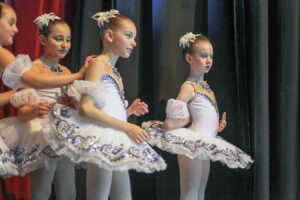
From stage lighting exposure to manual camera settings and composition, every technical choice in ballet photography serves the same goal: help viewers feel the performance. The techniques throughout this guide apply whether you are photographing a professional company, a contemporary work, or a student recital in a theater environment.
Photographing ballet is widely considered one of the most demanding disciplines in performance photography. Unlike portraits or landscapes, dance combines speed, emotion, choreography, dramatic lighting, and split-second timing into a single frame.
Successful ballet photography isn’t simply about freezing motion—it’s about capturing movement, emotion, and storytelling at precisely the right moment. Whether you’re photographing a professional ballet company, a dance recital, or a contemporary performance, understanding how dancers move is just as important as understanding your camera.
Table of Contents
Understand the Movement Before You Photograph It
Anticipating choreography rather than reacting to it separates professional ballet photographers from those who miss decisive moments. The workflow infographic below outlines how learning a performance’s rhythm, jumps, and emotional peaks informs camera position, shutter speed, and timing before the first frame is captured.
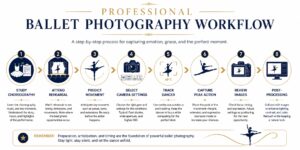
Watching rehearsals connects directly to stronger results in dance photography and live performance coverage, where split-second timing determines whether a frame communicates grace or blur. Use the workflow as a checklist before every assignment, pairing movement study with appropriate camera settings for the venue.
Learn the Choreography Before the Performance
Every dance performance follows a rhythm, and experienced dance photographers learn to anticipate it rather than react to it. Watching rehearsals or attending the performance before photographing it lets you recognize major jumps, dramatic poses, emotional moments, transitions between movements, and choreographed highlights. The more familiar you become with the choreography, the easier it becomes to capture decisive moments.
Choose the Right Shutter Speed for Every Performance
Shutter speed is the primary exposure variable for freezing dance movement without sacrificing atmosphere. The comparison table below lists recommended speeds for static poses, slow dance, ballet jumps, fast choreography, and contemporary work — reference ranges you can adjust based on available light and your camera’s high-ISO performance.
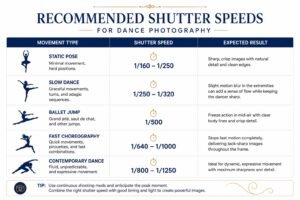
Modern sensors make these speeds achievable in typical theater lighting, though low-light techniques still matter when spotlights dim or colored gels reduce effective exposure. Pair the table with manual or auto ISO limits described in the camera settings guide to maintain sharpness without unacceptable noise.
Recommended Shutter Speeds for Different Dance Movements
Choosing the correct shutter speed is one of the biggest technical challenges in stage photography. Very fast movements require faster shutter speeds, while slower, dramatic moments allow for longer exposures.
| Movement | Recommended Shutter Speed |
|---|---|
| Static poses | 1/160–1/250 sec |
| Slow dance | 1/250–1/320 sec |
| Ballet jumps | 1/500 sec |
| Fast choreography | 1/640–1/1000 sec |
| Contemporary dance | 1/800–1/1250 sec |
Today’s high-ISO cameras make these shutter speeds much easier to achieve than they were in the film era.
Freeze Motion Without Losing Atmosphere
Balance Sharpness with Natural Motion Blur
Many photographers try to freeze every movement, but perfectly frozen images don’t always communicate the energy of the performance. Sometimes allowing a slight hint of motion in flowing costumes, hands, or fabric creates photographs that feel more alive while keeping the dancer’s face sharp. The goal isn’t technical perfection alone, but visual storytelling.
Focus on the Peak of the Movement
The highest point of a jump — when a dancer appears weightless and body lines reach full extension — produces the most iconic ballet photographs. The peak-action timing diagram below shows when movement briefly slows and the pose reaches maximum visual impact, helping photographers trigger bursts at the decisive instant rather than during takeoff or landing.
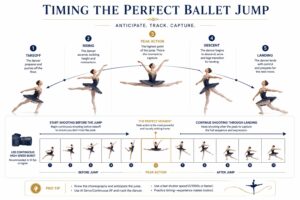
Combine peak-timing awareness with continuous autofocus and a shutter speed near 1/500 sec to freeze the floating moment while preserving performance atmosphere. This approach aligns with broader dance photography principles and the anticipation techniques covered in the sections on music rhythm and burst timing.
Capture the Highest Point of Every Jump
One of the most recognizable moments in ballet photography occurs at the highest point of a jump. At this instant, the dancer appears weightless, body lines are fully extended, movement briefly slows, and the pose reaches its maximum visual impact. This “floating” moment creates dramatic photographs that showcase strength, grace, and precision.
Use Continuous Autofocus for Dance Photography
Fast-moving performers exceed the reliability of single-shot autofocus within a single phrase of choreography. The infographic below summarizes the modern AF toolkit — continuous AF, subject tracking, eye detection, and high-speed burst — that replaces the manual focusing techniques photographers relied on decades ago.

Configure these modes before the performance begins and verify focus accuracy during lighting checks under actual stage lighting conditions. Pair AF-C with the shutter speeds and ISO limits from the camera settings guide to maintain sharp eyes and clean costumes throughout unpredictable movement.
Best Autofocus Settings for Fast-Moving Performers
Modern cameras offer autofocus systems that far outperform the manual focusing photographers relied on decades ago.
- Continuous AF (AF-C / AI Servo)
- Subject Tracking
- Eye Detection (when available)
- High-Speed Continuous Burst
These features dramatically improve your chances of capturing the perfect frame.
Anticipate Rather Than React
Time Your Burst Before the Action Peaks
Professional photographers rarely wait until the jump happens. Instead, they follow the dancer before the movement begins, maintain continuous focus, begin shooting just before the peak action, and continue through the landing. This sequence greatly increases the likelihood of capturing the strongest expression and body position.
Learn the Music
Use Rhythm to Predict Decisive Moments
Dance follows music, not random movement. Understanding the rhythm helps photographers predict leaps, turns, dramatic pauses, synchronized group movements, and emotional climaxes. Experienced performance photographers often know exactly when important moments will occur simply by listening to the music.
Choose the Best Shooting Position
Camera height and lateral position change how jumps, body lines, and ensemble spacing read in the final frame. The comparison diagram below contrasts orchestra level, low angle, and side-stage viewpoints — each offering distinct storytelling advantages when used within theater rules and audience etiquette.
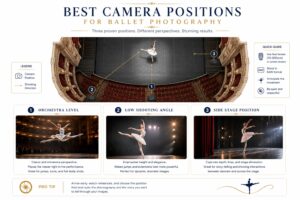
Orchestra level delivers natural perspective, while a slightly lower viewpoint exaggerates jump height and emphasizes body lines. Side-stage angles create dynamic compositions when permitted — always prioritize performer and audience respect alongside strong composition in theater photography assignments.
Find the Most Effective Camera Angle
Camera position has a major impact on how movement is perceived.
Orchestra Level
Provides natural perspective and balanced compositions.
Low Shooting Angle
A slightly lower viewpoint makes jumps appear higher and more dramatic while emphasizing the dancer’s body lines.
Side Stage Position
When permitted, side-stage angles reveal movement differently and can create dynamic storytelling images. Always respect theater rules and avoid distracting performers or the audience.
Master Theater Lighting
Handle Constantly Changing Stage Lighting
Unlike studio photography, stage lighting constantly changes.
- Strong spotlights
- Deep shadows
- Colored lighting
- Rapidly changing exposure
Manual exposure generally provides the most consistent results throughout a performance.
When photographing stage productions:
- Expose for highlights
- Avoid clipping skin tones
- Shoot in RAW
- Adjust white balance during post-processing
Photographing Solo Dancers
Create Powerful Dance Portraits
A solo performance gives photographers complete control over composition.
- Elegant body lines
- Expressive hands
- Emotional facial expressions
- Interaction with stage lighting
- Negative space around the performer
The strongest dance portraits communicate emotion as effectively as movement.
Photographing Group Dance Performances
Capture Symmetry and Choreography
Photographing an ensemble requires a different approach.
- Symmetry
- Spacing
- Synchronized movement
- Geometric formations
- Interaction between performers
Wide compositions often emphasize the choreography itself rather than individual dancers.
Tell the Story Behind the Performance
Combine Emotion, Movement, and Visual Storytelling
Exceptional performing arts photography goes beyond documenting technical skill.
- Tension
- Elegance
- Emotion
- Narrative
- Connection between dancers
- Interaction with the music
A technically perfect jump means little if it doesn’t communicate the feeling of the performance.
Recommended Camera Settings for Ballet Photography
Professional Starting Camera Settings
- Mode: Manual Exposure
- Shutter Speed: 1/500–1/1000 sec
- Aperture: f/2.8–f/4
- ISO: Auto ISO with an upper limit based on your camera’s noise performance
- Focus Mode: Continuous Autofocus
- Drive Mode: High-Speed Continuous
- File Format: RAW
These settings balance sharpness, flexibility, and image quality in challenging theater environments.
Final Thoughts
Create Memorable Ballet Photographs Through Timing and Storytelling
The principles of dance photography have remained remarkably consistent over time. Technology has advanced dramatically, but the photographer’s role is still the same: anticipate the movement, understand the choreography, and capture the decisive moment.
The most memorable ballet photographs aren’t simply images of dancers in motion—they’re visual stories that preserve the artistry, discipline, and emotion of the performance. Whether you’re photographing a professional ballet company, a contemporary dance performance, or a student recital, mastering timing, lighting, and composition will help you create images that celebrate the beauty of movement.
Related Articles
- Portrait Photography Guide — Professional portrait composition, expression, lighting, and subject direction.
- Group Portrait Photography Guide — Posing, lighting, camera settings, and composition for multiple subjects.
- Photography Studio Rental NYC — Controlled studio space for portrait, creative, and performance-inspired photography.
- Photo & Video Production — Full-service production support for commercial and creative projects.
Frequently Asked Questions
FAQ Navigation
What shutter speed should I use for ballet photography?
Shutter speed depends on the type of movement. Static poses work at 1/160–1/250 sec, slow dance at 1/250–1/320 sec, ballet jumps at 1/500 sec, fast choreography at 1/640–1/1000 sec, and contemporary dance at 1/800–1/1250 sec. Modern high-ISO cameras make these speeds achievable in typical theater lighting conditions.
How do you photograph ballet jumps?
Focus on the highest point of the jump when the dancer appears weightless, body lines are fully extended, and movement briefly slows. Use continuous autofocus, begin shooting just before the peak action, and continue through the landing. A shutter speed of approximately 1/500 sec helps freeze the floating moment while preserving atmosphere.
What autofocus mode is best for dance photography?
Continuous AF (AF-C or AI Servo) combined with subject tracking and eye detection when available delivers the best results for fast-moving performers. Pair continuous autofocus with high-speed continuous burst mode to maximize your chances of capturing the perfect frame during unpredictable stage movement.
How do you handle stage lighting in ballet photography?
Stage lighting changes constantly with spotlights, deep shadows, colored gels, and shifting exposure. Manual exposure generally provides the most consistent results. Expose for highlights, avoid clipping skin tones, shoot in RAW, and adjust white balance during post-processing to manage theater lighting variations.
What camera settings work best for ballet performances?
Professional starting settings include manual exposure mode, shutter speeds of 1/500–1/1000 sec, aperture f/2.8–f/4, auto ISO with an upper limit based on your camera’s noise performance, continuous autofocus, high-speed continuous drive mode, and RAW file format. These settings balance sharpness, flexibility, and image quality in challenging theater environments.
Why should you learn choreography before photographing ballet?
Every dance performance follows a rhythm, and experienced dance photographers learn to anticipate rather than react. Watching rehearsals or attending the performance beforehand helps you recognize major jumps, dramatic poses, emotional moments, transitions, and choreographed highlights—making decisive moments far easier to capture.
How do you capture the peak of a dance jump?
Anticipate rather than react. Follow the dancer before the movement begins, maintain continuous focus, start shooting just before peak action, and continue through the landing. The highest point of a jump produces the most recognizable ballet photographs because the dancer appears weightless with fully extended body lines.
What is the best camera position for ballet photography?
Orchestra level provides natural perspective and balanced compositions. A slightly lower shooting angle makes jumps appear higher and more dramatic while emphasizing body lines. When permitted, side-stage positions reveal movement differently and create dynamic storytelling images—always respecting theater rules and avoiding distraction to performers or the audience.
Should you freeze all motion in dance photography?
Not always. Perfectly frozen images don’t always communicate the energy of a performance. Sometimes allowing a slight hint of motion in flowing costumes, hands, or fabric creates photographs that feel more alive while keeping the dancer’s face sharp. The goal is visual storytelling, not technical perfection alone.
How does music help dance photographers?
Dance follows music, not random movement. Understanding rhythm helps photographers predict leaps, turns, dramatic pauses, synchronized group movements, and emotional climaxes. Experienced performance photographers often know exactly when important moments will occur simply by listening to the music.
How do you photograph group ballet performances?
Ensemble photography requires attention to symmetry, spacing, synchronized movement, geometric formations, and interaction between performers. Wide compositions often emphasize the choreography itself rather than individual dancers, capturing the collective precision of the ensemble.
What makes a great ballet photograph?
Exceptional ballet photography goes beyond documenting technical skill. The strongest images communicate tension, elegance, emotion, narrative, connection between dancers, and interaction with the music. A technically perfect jump means little if it doesn’t convey the feeling of the performance.


